

NPC Page Template
APn81 - Northern Poor Conifer Swamp
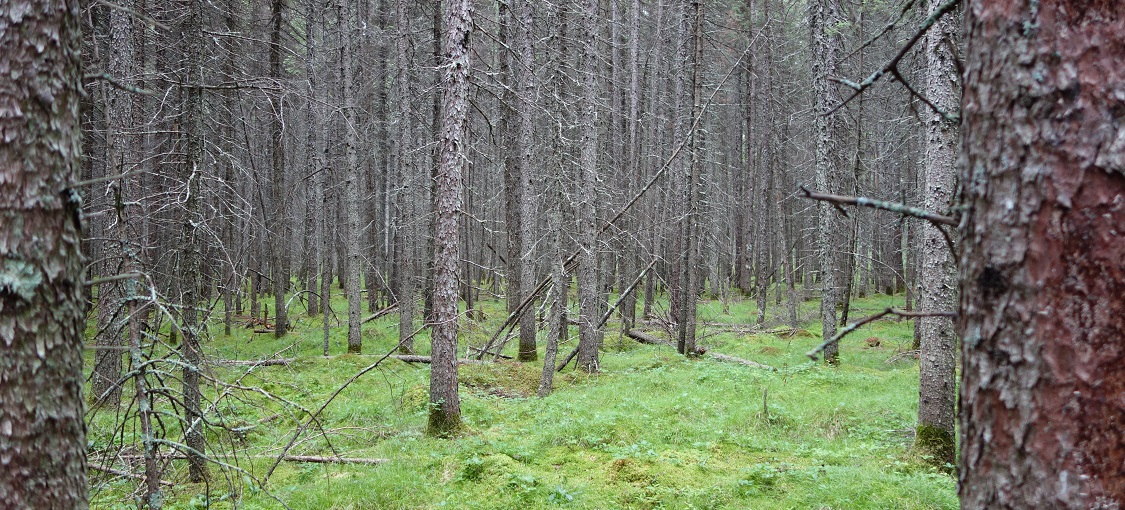
Vegetation Structure & Composition
Description is based on summary of vascular plant data from 53 plots (relevés) and bryophyte data from 5 plots.
- Moss layer is dominated mostly by Sphagnum species, which form nearly continuous carpets consisting of low hummocks of S. magellanicum and extensive lawns of S. angustifolium. Hollows are dominated by brown mosses such as Calliergon cordifolium.
- Forb cover is minimal and may include three-leaved false Solomon’s seal (Maiathemum trifolium) and pitcher plant (Sarracenia purpurea).
- Graminoid cover is 5-25%. Fine-leaved graminoids are most important and include three-fruited bog sedge (Carex trisperma) and tussock cottongrass (Eriophorum vaginatum).
- Low-shrub layer is dominated by ericaceous shrubs, typically with 5-25% cover; Labrador tea (Rhododendron groenlandicum) and leatherleaf (Chamaedaphne calyculata) have greatest abundance.
- Tall-shrub layer usually has 5-25% cover and includes minerotrophic indicators such as speckled alder (Alnus incana), bog birch (Betula pumila), and willows (Salix spp.).
- Understory trees include scattered black spruce or tamarack.
- Canopy is patchy (25-50% cover), and dominated by stunted (<33ft [10m] tall) black spruce or tamarack.
Notes: Species diversity is relatively low, but minerotrophic indicators are typical, including the moss Calliergon stramineum, which is present among Sphagnum species on hummocks (See Appendix D in Field Guides for an explanation of minerotrophic versus bog species).
Landscape Setting and Soils
APn81 occurs in peat-filled basins on nutrient-poor outwash plains, on bedrock dominated terrain, on non-calcareous till, and on other landforms in basins with small water- sheds where surface water input is minimal. In these basins, APn81 is often adjacent to open poor fens or rich swamps at the margins of bogs. APn81 also occurs in large peatlands on glacial lake plains in areas adjacent to rich fen water tracks or between forested bogs and uplands. In most settings soils are moderately deep to very deep peat (>20in [50cm]), although they can be shallower on bedrock-dominated landscapes or on nutrient-poor sand plains. The upper layer of soil is poorly decomposed (fibric) peat formed from Sphagnum and may be underlain by more decomposed peat of variable origin. The surface water is acidic (pH = 4.2 - 5.5) and low in minerals, particularly Ca++. Water-table fluctuations are less variable than in forested bogs (i.e., APn80) but more variable than in poor fens (i.e., APn91).