

NPC Page Template
FDc12 - Central Poor Dry Pine Woodland
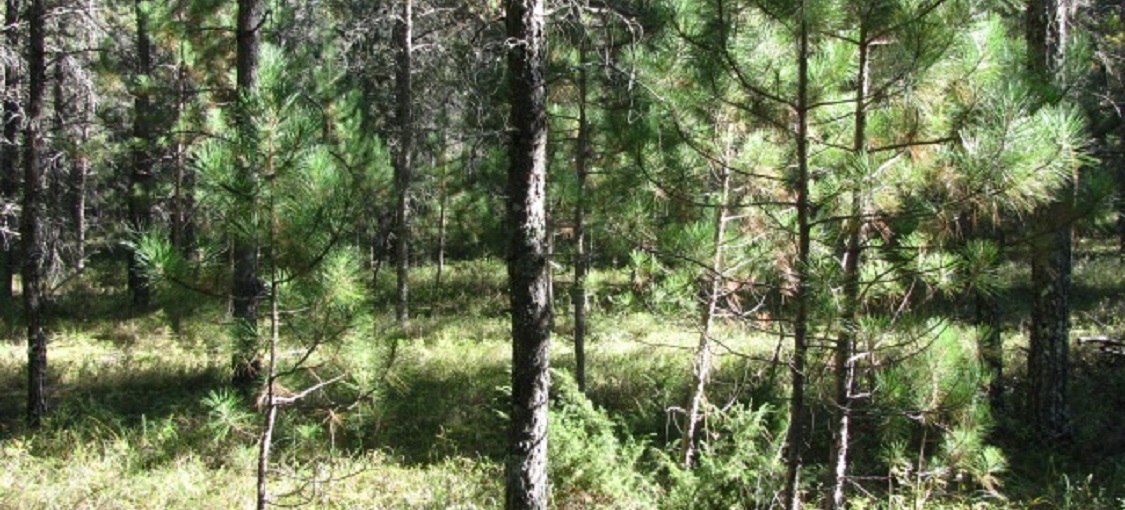
Vegetation Structure & Composition
Description is based on summary of vegetation data from 25 plots (relevés).
- Ground-layer is characterized by low, broad-leaved evergreen half-shrubs and herbs, which are common and often abundant, especially lowbush blueberry (Vaccinium angustifolium), wintergreen (Gaultheria procumbens), and bearberry (Arctostaphylos uva-ursi). Other ground-layer plants are sparse to patchy (5-50% cover) and consist mainly of dry woodland and shade-intolerant species such as northern bedstraw (Galium boreale), Canada mayflower (Maianthemum canadense), common strawberry (Fragaria virginiana), balsam ragwort (Packera paupercula), spreading dogbane (Apocynum androsaemifolium), pussytoes (Antennaria spp.), and sharp-pointed rice grass (Piptatherum pungens).
- Shrub-layer is sparse to patchy, with sand cherry (Prunus pumila) and juneberries (Amelanchier spp.) most common.
- Subcanopy is usually absent.
- Canopy is patchy to interrupted (25-75% cover) and strongly dominated by jack pine, occasionally with some red pine.
Landscape Setting and Soils
Outwash plains and sandy glacial lake plains. Landscape is level. Parent material is gravelly outwash and well-sorted sandy lacustrine sediments. Originally the parent material was calcareous, but free carbonates are typically leached from the upper 60in (150cm). Subsoil horizons that retain snowmelt or rainfall are absent. Soils have very low nutrient levels because of a long history of conifer cover and severe crown fires. Soils are excessively drained. Soil-moisture regime is moderately dry. (Chippewa Plains and Pine Moraines & Outwash Plains in MDL)