

NPC Page Template
FDs27 - Southern Dry-Mesic Pine-Oak Woodland
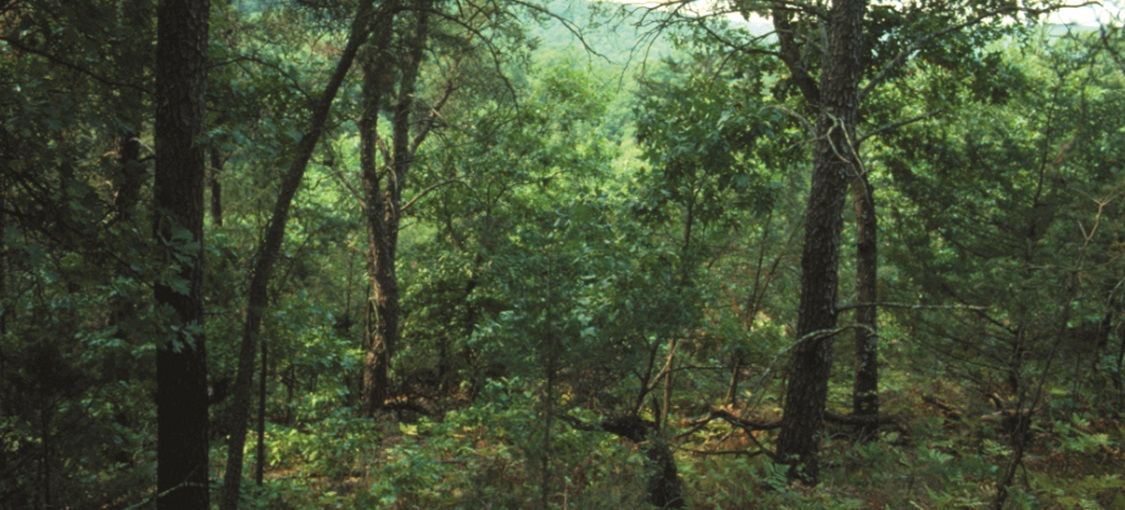
Vegetation Structure & Composition
Description is based on summary of vegetation data from 13 plots (relevés).
- Ground-layer cover is variable, ranging from sparse to interrupted (5-75%), with prairie species often present. Important species include flowering spurge (Euphorbia corollata), pussytoes (Antennaria spp.), harebell (Campanula rotundifolia), elliptic shinleaf (Pyrola elliptica), white rattlesnakeroot (Prenanthes alba), round-lobed hepatica (Anemone americana), downy rattlesnake plantain (Goodyera pubescens), heart-leaved aster (Symphyotrichum cordifolium), and yarrow (Achillea millefolium). Other common species include northern bedstraw (Galium boreale), Clayton’s sweet cicely (Osmorhiza claytonii), lopseed (Phryma leptostachya), columbine (Aquilegia canadensis), hog peanut (Amphicarpaea bracteata), white snakeroot (Ageratina altissima), bracken (Pteridium aquilinum), and Pennsylvania sedge (Carex pensylvanica). The community provides important habitat for several rare sand-loving plants, especially Canada forked chickweed (Paronychia canadensis) and marginal shield fern (Dryopteris marginalis) and also rough-seeded fameflower (Phemeranthus rugospermus), goat’s rue (Tephrosia virginiana), ebony spleenwort (Asplenium platyneuron), and seaside three-awn (Aristida tuberculosa).
- Climbing plants and vines are common but generally short. Common species include Virginia creeper (Parthenocissus vitacea) and wild grape (Vitis riparia).
- Shrub-layer cover is mostly patchy to interrupted (25-75%). White pine, bitternut hickory, white oak, pin cherry, and eastern red cedar are important tree saplings, while ninebark (Physocarpus opulifolius), bush juniper (Juniperus communis), and black raspberry (Rubus occidentalis) are important shrubs. Other common shrub-layer species include American hazelnut (Corylus americana), prickly ash (Zanthoxylum americanum), black cherry, gray dogwood (Cornus racemosa), and common poison ivy (Toxicodendron rydbergii). Pipsissewa (Chimaphila umbellata) and leadplant (Amorpha canescens) are typical half-shrubs.
- Subcanopy is sparse to patchy (25-100% cover) and often poorly differentiated from the canopy. White pine, eastern red cedar, black cherry, black oak, and white oak are often present.
- Canopy cover is patchy to interrupted (25-75%). Canopy is typically dominated by one or more of the following: white pine, jack pine, black oak, or bitternut hickory. Other common species include bur oak, northern pin oak, white oak, and paper birch. Northern red oak, black cherry, quaking aspen, and basswood are occasional.
Landscape Setting and Soils
Sand terraces and other sand deposits — Uncommon. Present on deep sands that have accumulated on valley floors of tributary streams or rivers of the Mississippi River south of the Twin Cities metropolitan area. Most of the sands originate from stream dissection and disintegration of local sandstone, but a few stream bottoms have sands derived from glacial outwash and from stream dissection of glacial till above the sandstone bedrock. Because of the mantle of silty loess that covers the uplands of the PPL, it is likely that fine sands were deposited in the area by wind as well. The sands are deposited in a variety of landforms including stream terraces, alluvial fans, ramps created by sand blown from valley floors onto adjacent slopes, and mixed deposits of sand and rocks (colluvium) at bases of sandstone outcrops. Although the bedrock from which sands are derived initially contained some carbonates, soils are poor and acidic. Soils tend to be uniformly sandy, lacking subsoil horizons or textural bands that can help to hold or perch snowmelt and rainfall. Soils are excessively drained. Soil-moisture regime is moderately dry. (Blufflands and Rochester Plateau in PPL; very local in Oak Savanna in MIM)