

NPC Page Template
FDs36 - Southern Dry-Mesic Oak-Aspen Forest
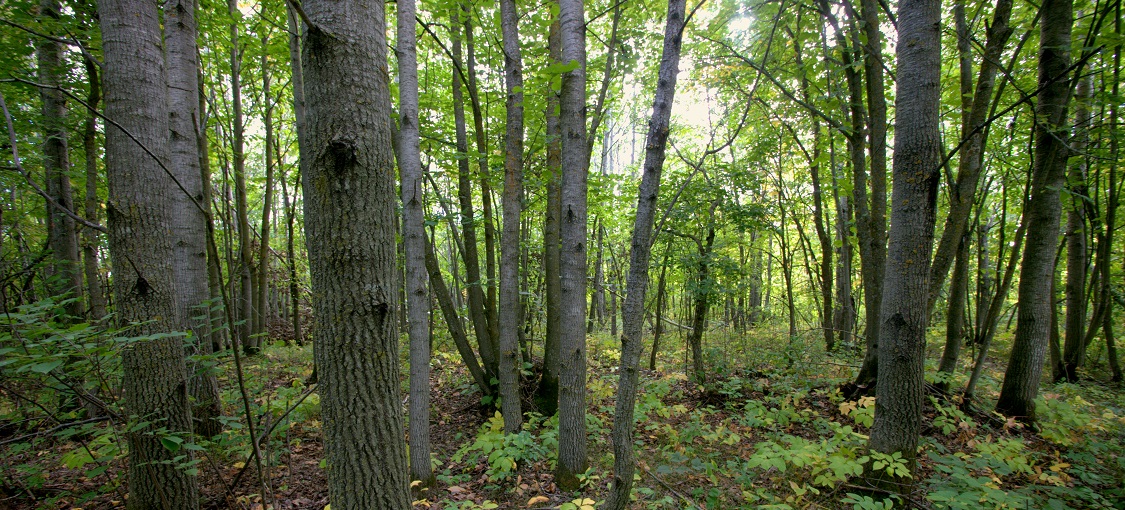
Vegetation Structure & Composition
Description is based on summary of vegetation data from 25 plots (relevés).
- Ground-layer cover is patchy to continuous (25-100%). Common species include large-flowered bellwort (Uvularia grandiflora), early meadow-rue (Thalictrum dioicum), Maryland black snakeroot (Sanicula marilandica), Clayton’s sweet cicely (Osmorhiza claytonii), wild sarsaparilla (Aralia nudicaulis), Canada mayflower (Maianthemum canadense), and Pennsylvania sedge (Carex pensylvanica).
- Shrub-layer cover is patchy to interrupted (25-75%); common species include downy arrowwood (Viburnum rafinesquianum), poison ivy (Toxicodendron rydbergii), chokecherry (Prunus virginiana), Juneberry (Amelanchier spp.), wolfberry (Symphoricarpos occidentalis), American hazelnut (Corylus americana), and gray dogwood (Cornus racemosa).
- Subcanopy cover is interrupted (50-75%); quaking aspen and green ash are the most common species. Occasionally, American elm is present.
- Canopy cover is mostly interrupted to continuous (50-100%); the most common species are bur oak and quaking aspen. Occasional species include basswood, American elm, green ash, and paper birch.
Landscape Setting and Soils
Stagnation moraines — Occasional. Present on rolling to hummocky terrain. Parent material is gravelly, loamy, calcareous till. Soils have very dark surface horizons typical of prairies, suggesting these sites were formerly occupied by prairie or open woodland (or that following fire in FDs36, soil development processes are similar to those in prairies). Soils have firm, clayey subsoil horizons that perch snowmelt and rainfall. These clayey horizons have elements of precipitated lime, and deeper horizons are highly calcareous. Soils are well drained, and the soil-moisture regime is fresh. (Hardwood Hills in MIM, RRV)