

NPC Page Template
FDw24 - Northwestern Dry-Mesic Oak Woodland
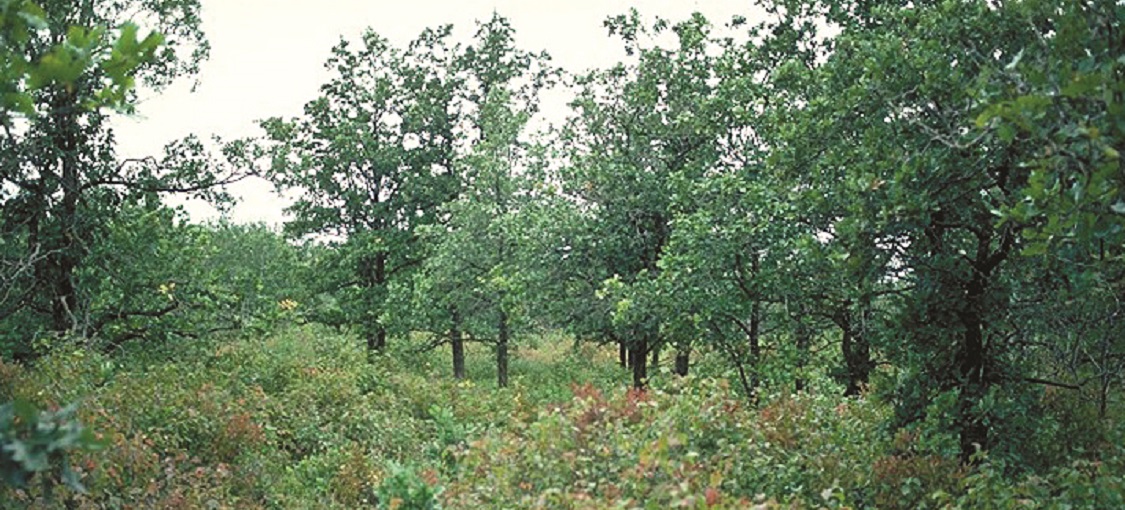
Vegetation Structure & Composition
Description is based on summary of vegetation data from 19 plots (relevés).
- Ground-layer cover is normally patchy (25-50%). The most common species are Canada mayflower (Maiathemum canadense), northern bedstraw (Galium boreale), wild sarsaparilla (Aralia nudicaulis), Lindley’s aster (Symphyotrichum ciliolatum), erect or smooth carrion-flower (Smilax ecirrhata or S. herbacea), veiny pea (Lathyrus venosus), spreading dogbane (Apocynum androsaemifolium), veiny meadow-rue (Thalictrum venulosum), and Pennsylvania sedge (Carex pensylvanica), with wild sarsaparilla and Pennsylvania sedge often abundant.
- Shrub-layer cover is patchy to interrupted (25-75%). Common species include bur oak, juneberries (Amelanchier spp.), snowberry or wolfberry (Symphoricarpos albus or S. occidentalis), downy arrowwood (Viburnum rafinesquianum), American hazelnut (Corylus americana), chokecherry (Prunus virginiana), nannyberry (Viburnum lentago), grey dogwood (Cornus racemosa), and poison ivy (Toxicodendron rydbergii).
- Subcanopy cover is sparse (5-25%). Bur oak and quaking aspen are often present but normally not abundant.
- Canopy cover is patchy to interrupted (25-75%). The most important species is bur oak. Quaking aspen and balsam poplar can also be present but are never abundant.
Landscape Setting and Soils
Beach ridges — Common. Present on beach ridges and on sandy deposits associated with beach ridges on the Glacial Lake Agassiz plain. Crests of ridges are 10 to 20ft (3 to 6m) higher than the adjacent land surface. Parent material is stratified, gravelly calcareous sand lacking large stones. Soil surface is dark in the upper 12in (30cm) because of incorporated organic matter. This organic matter could have been produced by the abundant sedges and grasses typically present in the ground layer of FDw24 or may have originated during former occupation of these sites by prairie or savanna. Soils have subsoil horizons with slight accumulations of clay, but these horizons are too discontinuous and weakly developed to significantly perch snowmelt or rainfall. Deeper soil horizons are gray-colored from shale staining and elements of precipitated lime and are strongly calcareous. Soils are excessively to moderately well drained, and the soil-moisture regime is moderately dry. (LAP,RRV)