

NPC Page Template
FFn67 - Northern Floodplain Forest
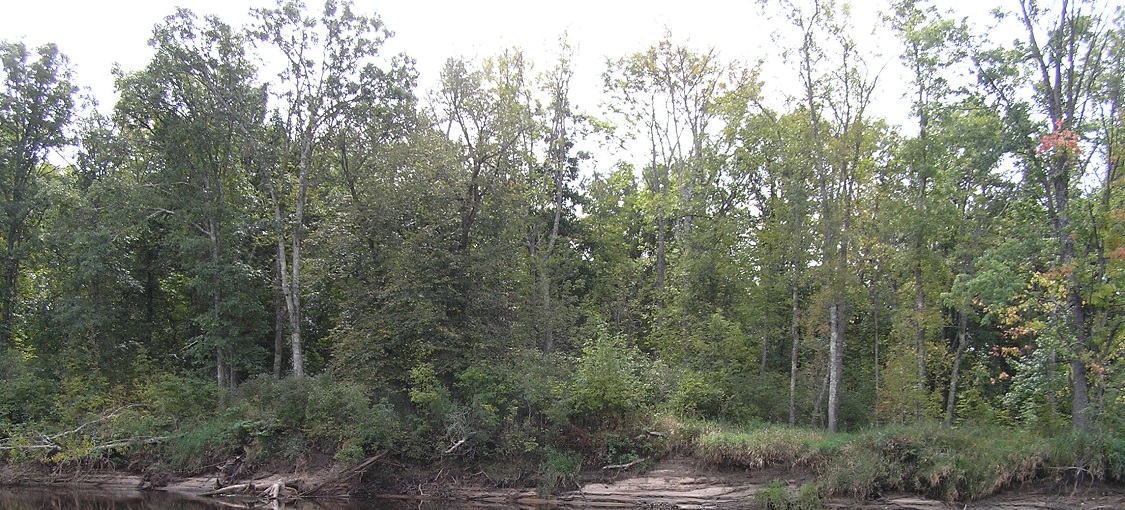
Vegetation Structure & Composition
Description is based on summary of vegetation data from 18 plots (relevés).
- Ground-layer is patchy (25-50% cover) and characterized by annual or flood-tolerant perennial species. Wood nettle (Laportea canadensis), Virginia wild rye (Elymus virginicus), and Tuckerman’s sedge (Carex tuckermanii) are sometimes abundant. Species typical of wetland communities are also often present, including mad dog skullcap (Scutellaria lateriflora), sensitive fern (Onoclea sensibilis), fringed loosestrife (Lysimachia ciliata), northern blue flag (Iris versicolor), three-cleft bedstraw (Galium trifidum), and clearweeds (Pilea spp.).
- Shrub-layer and subcanopy are sparse to patchy (5-50% cover); silver maple is the only woody species consistently present in the understory and is seldom abundant.
- Canopy is interrupted to continuous (50-100% cover) and strongly dominated by silver maple with occasional green ash, black ash, or American elm.
Landscape Setting and Soils
Floodplains — Occasional. Present only on active floodplains of major rivers. Parent material is complexly stratified sandy alluvium, often with a silty cap. The parent material may or may not have been calcareous originally, although free carbonates are rarely present now. Biogenic carbonates such as snail shells are occasionally present. Gray soil colors occur within 30in (75cm) of the surface and indicate permanently saturated conditions below. Annual flooding is typical. Soils are somewhat poorly or poorly drained. Soil-moisture regime is very moist. (Laurentian Mixed Forest and Tallgrass Aspen Parkland provinces; RRP; and Hardwood Hills in MIM)