

NPC Page Template
FPn62 - Northern Rich Spruce Swamp (Basin)
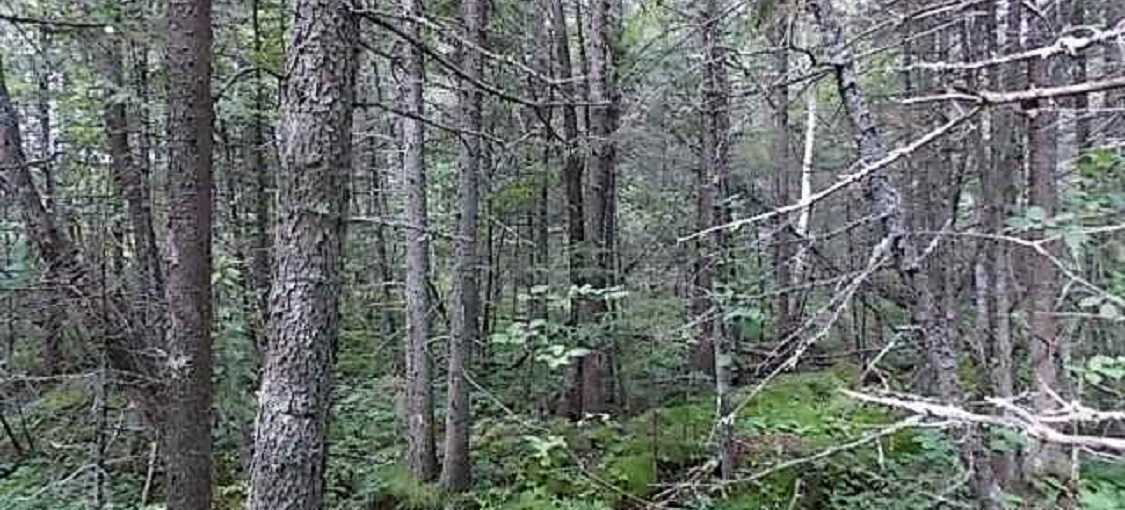
Vegetation Structure & Composition
Description is based on summary of vascular plant data from 21 plots (relevés).
- Moss layer usually with >50% cover. Characterized by hummocks, often interspersed with water-filled hollows. Typically dominated by Sphagnum in association with brown mosses and feathermosses.
- Graminoid layer with three-fruited bog sedge (Carex trisperma) usually present.
- Forb layer with bunchberry (Cornus canadensis) and starflower (Lysimachia borealis) usually present.
- Low-shrub cover is variable but typically contains the ericaceous species Labrador tea (Rhododendron groenlandicum) and creeping snowberry (Gaultheria hispidula).
- Tall-shrub cover is variable but commonly dominated by speckled alder (Alnus incana).
- Understory trees include black spruce, paper birch, and red maple.
- Canopy is interrupted to continuous (50-100%) and dominated by black spruce, commonly with some tamarack, paper birch, and balsam fir.
Landscape Setting and Soils
FPn62 occurs most often in small, poorly drained basins (usually less than 100 acres [40ha] in size) but can also occur in larger peatlands along linear drainage features. Most common on bedrock-controlled topography and on non-calcareous till in northeastern Minnesota. Soils are saturated, well-decomposed deep (>15in [40cm]) peat overlain by poorly decomposed Sphagnum peat. Surface water pH is >5.5. FPn62 can occupy entire basins, often fringed by Northern Alder Swamps (FPn73) or Northern Cedar Swamps (FPn63), or it may occur along the margins of peatland basins, between Northern Poor Conifer Swamps (APn81) and adjacent uplands.