

NPC Page Template
FPn63 - Northern Cedar Swamp
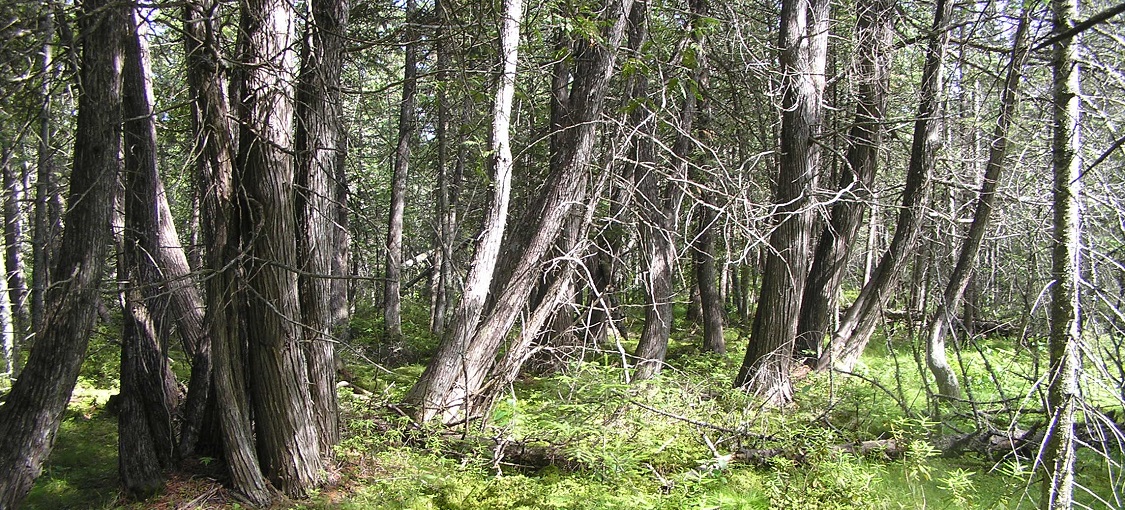
Vegetation Structure & Composition
Description is based on summary of vascular plant data from 54 plots (relevés) and bryophyte data from 16 plots.
• Moss layer has >50% cover and is characterized by hummocks and water-filled hollows. On hummocks, the dominant mosses are usually a mix of Sphagnum species and mat-forming brown mosses. Wet hollows are often colonized by brown mosses. Liverworts are common.
• Forb layer is variable but usually includes orchids such as small northern bog orchid (Platanthera obtusata), lesser rattlesnake plantain (Goodyera repens), and yellow lady’s slipper (Cypripedium parviflorum), and species common in adjacent upland forests such as starflower (Lysimachia borealis), goldthread (Coptis trifolia), twinflower (Linnaea borealis), and naked miterwort (Mitella nuda), along with dwarf raspberry (Rubus pubescens).
• Graminoid layer is variable but commonly includes bristle-stalked sedge (Carex leptalea) and soft-leaved sedge (C. disperma).
• Low-shrub layer is dominated by ericaceous species, especially Labrador tea (Rhododendron groenlandicum), with creeping snowberry (Gaultheria hispidula) usually present.
• Tall-shrub layer is variable but commonly dominated by dwarf alder (Rhamnus alnifolia), red-osier dogwood (Cornus sericea), speckled alder (Alnus incana), and fly honeysuckle (Lonicera canadensis).
• Understory trees typically include white cedar and balsam fir, and occasionally black ash and paper birch.
• Canopy cover is variable, ranging from interrupted to continuous (50-100%). Canopy is typically dominated by white cedar, with balsam fir and black spruce frequently present. Although balsam fir and black spruce are rarely dominant in the canopy, they can form patches within large white cedar–dominated swamps.
Landscape Setting and Soils
FPn63 develops on sites in or adjacent to peatland basins that are influenced by mineral rich subsurface water flow. Typical settings include margins of stream and river channels and lake basins, bases of beach ridges, and margins of large peatlands. FPn63 is frequently transected by streams or is present at the heads of small streams. Soils range from shallow or deep peat to organic sediment. Surface water pH is typically close to neutral (>6.0). Soils are saturated, and the water table is at the surface, except on higher hummocks and mounds over coarse woody debris. Water-filled hollows are present but frequently become dry during drought periods.