

NPC Page Template
FPn71 - Northern Rich Spruce Swamp (Water Track)
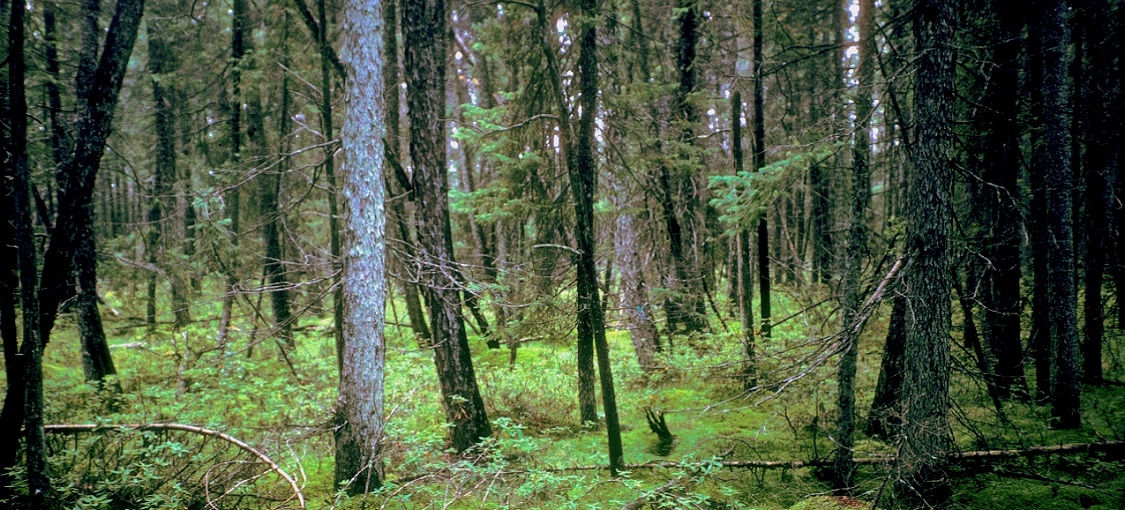
Vegetation Structure & Composition
Description is based on summary of vegetation data from 13 plots (relevés).
- Moss layer usually with >75% cover, characterized by hummocks and often by water-filled hollows. Typically dominated by Sphagnum in association with feathermosses (predominantly Pleurozium schreberi).
- Forb layer has variable cover, with goldthread (Coptis trifolia), three-leaved false Solomon’s seal (Maiathemum trifolium), and sweet-scented bedstraw (Galium triflorum) usually present.
- Low-shrub layer is dominated by Labrador tea (Rhododendron groenlandicum), with other ericaceous species such as small cranberry (Vaccinium oxycoccos) and lingonberry (Vaccinium vitis-idaea) usually also present.
- Tall-shrub layer is patchy to interrupted (25-75% cover), with dwarf alder (Rhamnus alnifolia) and red-osier dogwood (Cornus sericea) usually present.
- Understory trees include black spruce, tamarack, and white cedar.
- Canopy cover is typically 50-75%. Canopy is dominated by black spruce, with tamarack and white cedar frequently present, although sparse.
Landscape Setting and Soils
FPn71 occurs in large peatland complexes on the Glacial Lake Agassiz Plain in northwestern Minnesota, usually in settings influenced by lateral flow of mineral-rich ground- water associated with water tracks, or rarely, spring fen seepage areas. Soils are deep peat (>15in [40cm]) underlain by calcareous lake clays with occasional sandy lenses. Surface water pH ranges from 5.6 to 7.2, with the most alkaline sites adjacent to spring fen seepage areas. Along water tracks, FPn71 typically occurs on slightly drier zones, with Northern Rich Fens (Water Track) (OPn91) in the lowest and wettest areas, and Northern Rich Tamarack Swamps (Water Track) (FPn81) in areas intermediate in water regime. In spring fen areas, FPn71 often borders the upwelling seepage zone, adjacent to Northern Extremely Rich Fens (OPn93).