

NPC Page Template
FPw63 - Northwestern Rich Conifer Swamp
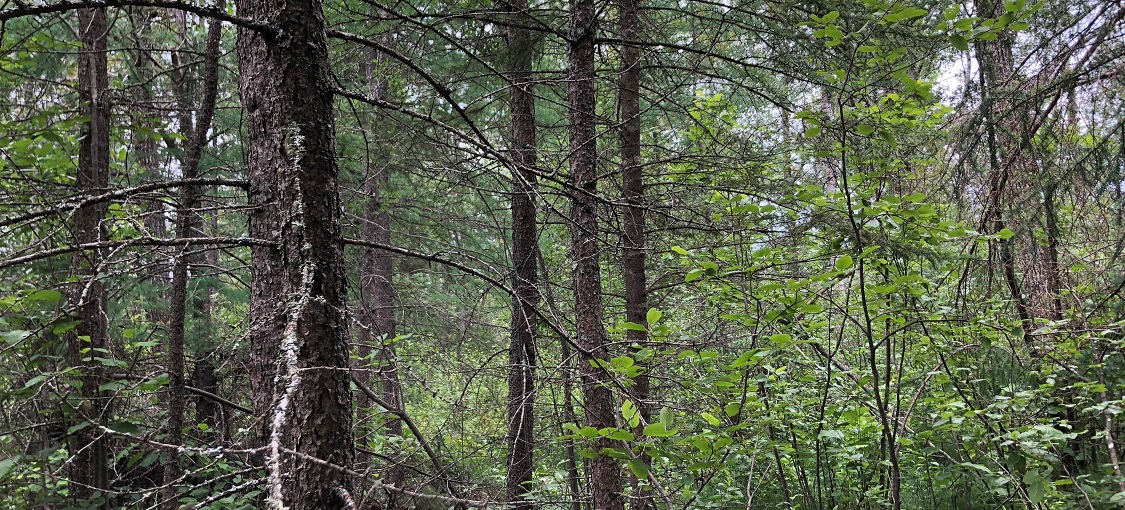
Vegetation Structure & Composition
Description is based on summary of vascular plant data from 29 plots (relevés).
- Moss layer is variable, often dominated by brown mosses, with Sphagnum usually present.
- Graminoid layer has variable cover, with fowl manna grass (Glyceria striata) and fringed brome (Bromus ciliatus) typically present, and soft-leaved sedge (Carex disperma), lake sedge (C. lacustris), and bluejoint (Calamagrostis canadensis) common.
- Forb layer is patchy to interrupted (25-75% cover) and usually includes dwarf raspberry (Rubus pubescens), spotted Joe pye weed (Eutrochium maculatum), red-stemmed aster (Symphyotrichum puniceum), and sweet-scented bedstraw (Galium triflorum), with starflower (Lysimachia borealis), naked miterwort (Mitella nuda), common marsh marigold (Caltha palustris), and twinflower (Linnaea borealis) common.
- Low-shrub layer is dominated by red raspberry (Rubus idaeus) or Labrador tea (Rhododendron groenlandicum).
- Tall-shrub layer is variable but frequently includes bog birch (Betula pumila), red- osier dogwood (Cornus sericea), dwarf alder (Rhamnus alnifolia), and willows (Salix spp).
- Understory trees include tamarack, with black spruce (if present in the canopy) and occasionally with black ash and elms.
- Canopy is patchy to interrupted (25-75% cover), typically dominated by tamarack or occasionally by black spruce.
Landscape Setting and Soils
FPw63 occurs in peat-filled depressions associated with sandy beach deposits, on glacial lake plains or on till plains. Soils are well-decomposed peat over calcareous till or lacustrine sediments. Surface water is circumneutral (pH 7.1 – 7.8). Water table is near the surface following spring runoff. Hollows are often water filled. FPw63 can occur in large, contiguous stands up to several hundred acres in size but often is present in smaller patches mixed with shrub swamps.