

NPC Page Template
MHc37 - Central Mesic Hardwood Forest (Western)
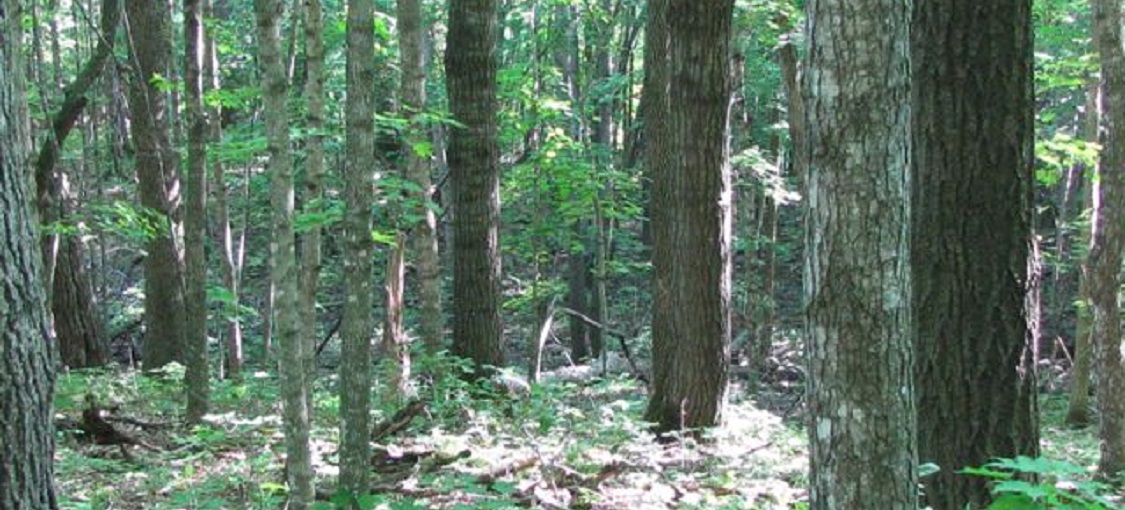
Vegetation Structure & Composition
Description is based on summary of vegetation data from 57 plots (relevés).
- Ground-layer cover is variable, with large- flowered bellwort (Uvularia grandiflora) and Pennsylvania sedge (Carex pensylvanica) the most important species. Other common species include early meadow-rue (Thalictrum dioicum), zigzag goldenrod (Solidago flexicaulis), wild sarsaparilla (Aralia nudicaulis), rugulose or yellow violets (Viola canadensis/pubescens group), and rattlesnake fern (Botrypus virginianus). Overall, ground- layer species richness is considerably lower than in other central and southern mesic hardwood forest classes in Minnesota.
- Shrub-layer is typically interrupted to continuous (50-100% cover), with abundant sugar maple saplings. Ironwood, chokecherry (Prunus virginiana), and leatherwood (Dirca palustris) are also common.
- Subcanopy is patchy to continuous (25-100% cover) and dominated by sugar maple, often with ironwood and basswood.
- Canopy is interrupted to continuous (50-100% cover), usually dominated by sugar maple and basswood, often with paper birch and less frequently with quaking aspen, northern red oak, bur oak, American elm, or ironwood. In rare instances, the canopy is dominated by northern red oak or quaking aspen.
Landscape Setting and Soils
Stagnation moraines — Common. Landscape is rolling to very hummocky, with variable relief. Parent material is calcareous, loamy till with modest amounts of gravel. Free carbonates are present below 20-30in (50-75cm). Surface horizons are dark, indicating the past presence of prairie or brushland vegetation. Soils have firm, clay-loam subsoil horizons capable of perching snowmelt and rainfall, but there are no soil colors indicative of prolonged saturation. Soils are well drained. Soil-moisture regime is fresh or very fresh. (Hardwood Hills in MIM; Agassiz Lowlands [Ponemah Point only] in MOP; Pine Moraines & Outwash Plains in MDL)