

NPC Page Template
MHs49 - Southern Wet-Mesic Hardwood Forest
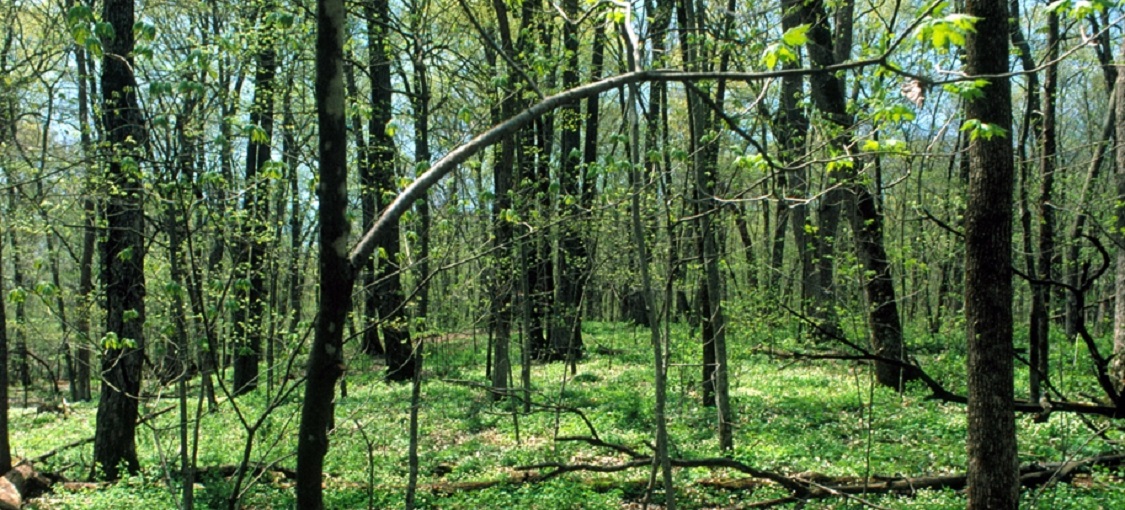
Vegetation Structure & Composition
Description is based on summary of vegetation data from 39 plots (relevés).
- Ground-layer cover is mostly continuous (75-100%). Important species include false rue anemone (Enemion biternatum), blue phlox (Phlox divaricate), stemless blue violets (Viola sororia and V. missouriensis), hispid buttercup (Ranunculus hispidus), appendaged waterleaf (Hydrophyllum appendiculatum), Virginia spring beauty (Claytonia virginica), tall coneflower (Rudbeckia laciniata), white trout lily (Erythronium albidium), yellow trout lily (E. americanum), white bear sedge (Carex albursina), and hairy-leaved sedge (C. hirtifolia). Other common and often abundant species include Virginia waterleaf (Hydrophyllum virginianum), cleavers (Galium aparine), and wood nettle (Laportea canadensis).
- Shrub-layer cover is variable, ranging from sparse to continuous (5-100%); typical species are chokecherry (Prunus virginiana), Missouri gooseberry (Ribes missouriense), basswood, sugar maple, black ash, hackberry, bitternut hickory, American elm, red elm, and rock elm.
- Subcanopy is generally patchy to continuous (25-100% cover), with sugar maple, basswood, hackberry, ironwood, black ash, and elms the most common species.
- Canopy cover is mostly interrupted to continuous (50-100%). Species composition is variable, but basswood, black ash, sugar maple, American elm, red elm, rock elm, green ash, hackberry, box elder, and bur oak are common. Butternut and black walnut are present in some stands.
Landscape Setting and Soils
- Stream valleys and stagnation moraines — Common. Present on modern alluvium in rugged landscapes, including dissected sedimentary bedrock terrain, stagnation moraines, and deep tributary stream valleys of major rivers. Local relief is sufficiently high for alluvium to be deposited as terraces, fans, and benches at toes of slopes. Parent material is silty on the surface with complex stratification of silt, coarse sand, gravel, and buried organic matter below. Soil is typically leached of free carbonates. Soil colors 50-80in (125-200cm) deep indicate prolonged periods of saturation. Soils are moderately well drained. Soil moisture regime is moist to very moist. (Anoka Sand Plain, Big Woods, and Oak Savanna in MIM; PPL; Minnesota River Prairie in CGP)
- Moraines and till plains — Occasional. Present on lake peninsulas, benches along lakeshores, and as wet inclusions on low sites within larger areas of Mesic Hardwood Forest Communities. Parent material is clayey to loamy, calcareous till with free carbonates present below 30-40in (75-100cm). Clayey subsoil horizons and generally fine-textured parent material help to perch snowmelt and rainfall near the soil surface. Most soils have rather black surface horizons, suggesting a past history of prairie on these sites. Gray soil colors or mottles are commonly present but at depths greater than 30in (75cm). Soils are moderately well drained. Soil moisture regime is moist to very moist. (Big Woods and Oak Savanna in MIM; Minnesota River Prairie in CGP)