

NPC Page Template
MHw36 - Northwestern Wet-Mesic Hardwood Forest
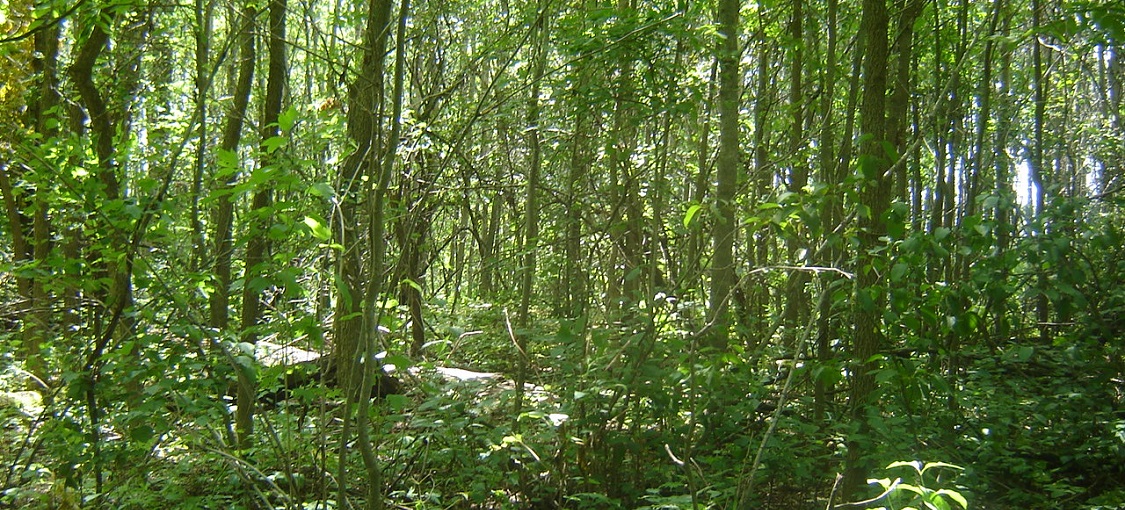
Vegetation Structure & Composition
Description is based on summary of vegetation data from 6 plots (relevés).
- Ground-layer cover is typically patchy (25-50%). Common species include Canada mayflower (Maianthemum canadense), Maryland black snakeroot (Sanicula marilandica), sweet-scented bedstraw (Galium triflorum), spreading dogbane (Apocynum androsaemifolium), dwarf raspberry (Rubus pubescens), red baneberry (Actaea rubra), nodding trillium (Trillium cernuum), and Pennsylvania sedge (Carex pensylvanica).
- Shrub-layer cover is patchy to interrupted (25-75%). The most common species are juneberries (Amelanchier spp.), downy arrowwood (Viburnum rafinesquianum), gray dogwood (Cornus racemosa), highbush cranberry (Viburnum trilobum), beaked hazelnut (Corylus cornuta), American elm, bur oak, and quaking aspen, with beaked hazelnut and gray dogwood often abundant.
- Subcanopy cover is sparse (5-25%), with occasional green ash, box elder, American elm, quaking aspen, bur oak, or balsam poplar.
- Canopy cover is interrupted to continuous (50-100%). The most common species are quaking aspen, bur oak, American elm, green ash, and basswood.
Landscape Setting and Soils
- Alluvial deposits — Common. Present on alluvial soils along rivers draining the Glacial Lake Agassiz plain. Parent material is stoneless silt of very fine sand that has been leached of carbonates to depths greater than 50in (125cm). Sites are rarely flooded and soils have gray colors that indicate a stable high water table at about 24in (60cm) below the ground surface. Soils are moderately well drained to somewhat poorly drained, and the soil-moisture regime is moist to very moist. (LAP)
- Beach deposits — Occasional. Present on broad flats associated with shoreline features of Glacial Lake Agassiz. Parent material is calcareous, fine-sandy deposits that have some gravel and no stones. Soil surface is dark and organic-rich to about 20in (50cm). Beneath are gray-colored sands that are saturated for most of the growing season. Carbonates are concentrated in the upper horizons by evaporation and transpiration. Soils are somewhat poorly drained, and the soil-moisture regimes is very moist. (LAP)