

NPC Page Template
WFs55 - Southern Wet Aspen Forest
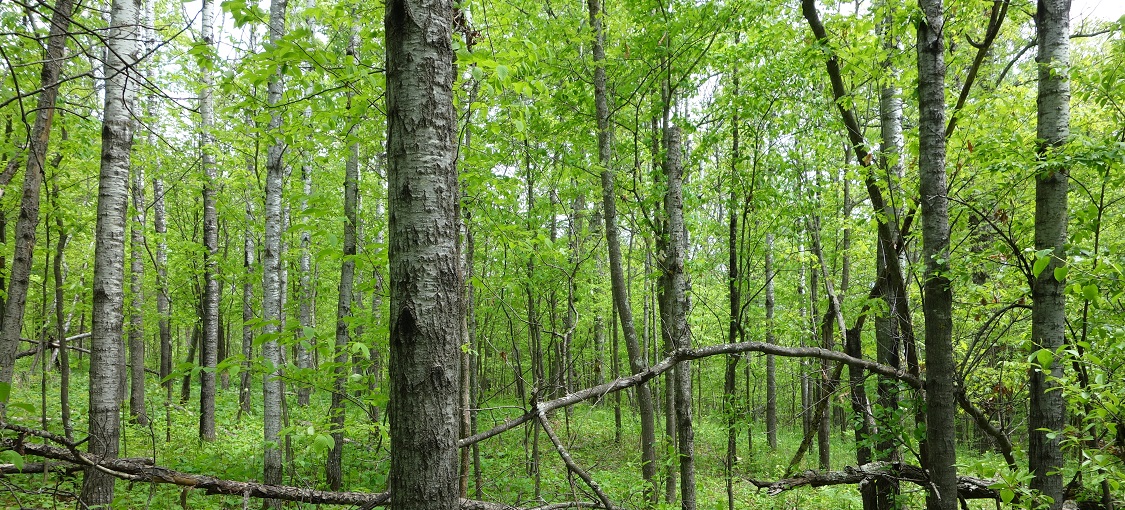
Vegetation Structure & Composition
Description is based on field observations.
- Ground-layer cover is patchy to continuous (25-100%) and composed of a mixture of wet prairie, wet forest and upland forest species. Common species include mountain rice grass (Oryzopsis asperifolia), bluejoint (Calamagrostis canadensis), false melic grass (Schizachne purpurascens), long-stalked sedge (Carex pedunculata), large-leaved aster (Eurybia macrophylla), wild sarsaparilla (Aralia nudicaulis), dwarf raspberry (Rubus pubescens), common strawberry (Fragaria virginiana), Canada mayflower (Maianthemum canadense), Peck’s sedge (Carex peckii), and field horsetail (Equisetum arvense). In wetter parts of the community, lake sedge (Carex lacustris), tussock sedge (C. stricta), and Hayden’s sedge (C. haydenii), swamp thistle (Cirsium muticum), spotted water hemlock (Cicuta maculata), and bottle gentian (Gentiana andrewsii) are common.
- Shrub-layer cover is patchy to interrupted (25-75%). Common species include downy arrowwood (Viburnum rafinesquianum), Saskatoon juneberry (Amelanchier alnifola), chokecherry (Prunus virginiana), gray dogwood (Cornus racemosa), prickly rose (Rosa acicularis), wild honeysuckle (Lonicera dioica), highbush cranberry (Viburnum trilobum), pussy willow (Salix discolor), beaked hazelnut (Corylus cornuta), red raspberry (Rubus idaeus), poison ivy (Toxicodendron rydbergii), and nannyberry (Viburnum lentago).
- Subcanopy cover is patchy to interrupted (25-75%). The most common species are quaking aspen, bur oak, American elm, and black ash.
- Canopy cover is mostly interrupted to continuous (50-100%). The most common species are quaking aspen, black ash, and bur oak.
Landscape Setting and Soils
WFs55 occurs on level to gently rolling outwash plains. Parent material is deep, circumneutral, sandy glacial outwash. Soil texture is sandy-loam over loose sand. The top 14in (35cm) are very dark to dark. Below this, soils are grayish to light brownish gray. Soils are moderately well drained to poorly drained with moderate to high organic matter. The water table is usually not high enough to affect the ground-layer composition of the community or to cause peat accumulation.