

NPC Page Template
WFw54 - Northwestern Wet Aspen Forest
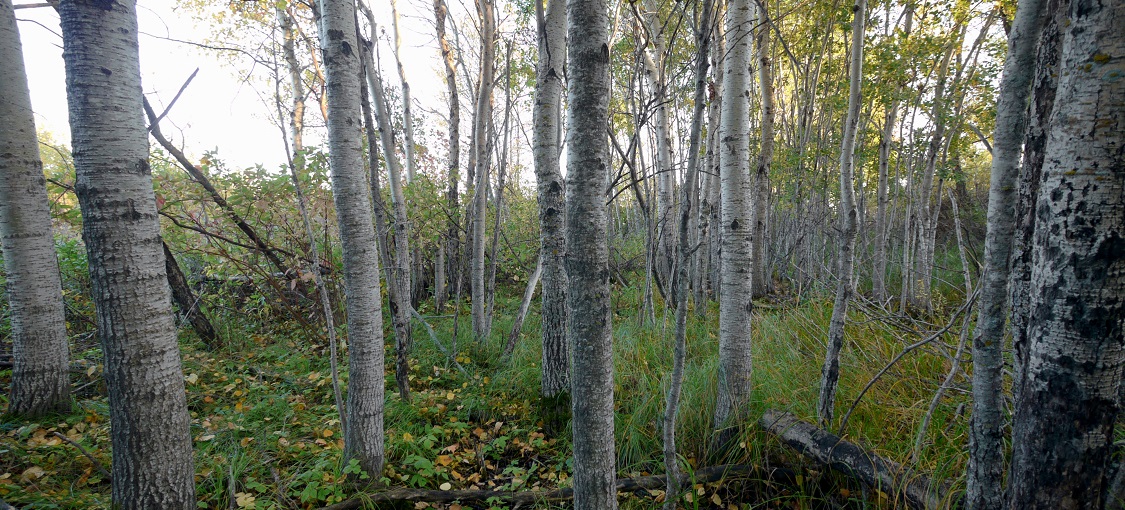
Vegetation Structure & Composition
Description is based on summary of vegetation data from 15 plots (relevés).
- Ground-layer is composed of a mixture of wet forest and upland forest species. The most common species are common strawberry (Fragaria virginiana), side-flowering aster (Symphyotrichum lateriflorum), starry false Solomon’s seal (Maianthemum stellatum), sweet-scented bedstraw (Galium triflorum), wild sarsaparilla (Aralia nudicaulis), Lindley’s aster (S. ciliolatum), northern bedstraw (G. boreale), and palmate sweet coltsfoot (Petasites frigidus).
- Shrub-layer is patchy, with abundant black ash seedlings and saplings; American elm and bur oak seedlings and saplings are also common. The most important shrub species is red-osier dogwood (Cornus sericea); other common shrubs include beaked hazelnut (Corylus cornuta), highbush cranberry (Viburnum trilobum), poison ivy (Toxicodendron rydbergii), dwarf alder (Rhamnus alnifolia), and red raspberry (Rubus idaeus).
- Subcanopy is patchy (25-50% cover), with black ash, quaking aspen, American elm, and balsam poplar most common.
- Canopy is patchy to continuous (25-100% cover) and dominated by quaking aspen, balsam poplar, or black ash, sometimes with paper birch. White spruce and tamarack may also be present.
Landscape Setting and Soils
WFw54 occurs on level to undulating sites on the Glacial Lake Agassiz plain. Parent material is loamy sand deposited in shallow water; gravel lenses are common. The parent material is calcareous, with free carbonates concentrated near the surface. Soil surface may have patches of thin muck, and the top 10in (25cm) of mineral soil are very dark because of incorporated organic matter. Gray colors below the surface horizons indicate permanently saturated conditions lower in the soil. Soils are very poorly drained. Soil-moisture regime is very moist to moderately wet. (LAP)